
The History of the Saxophone
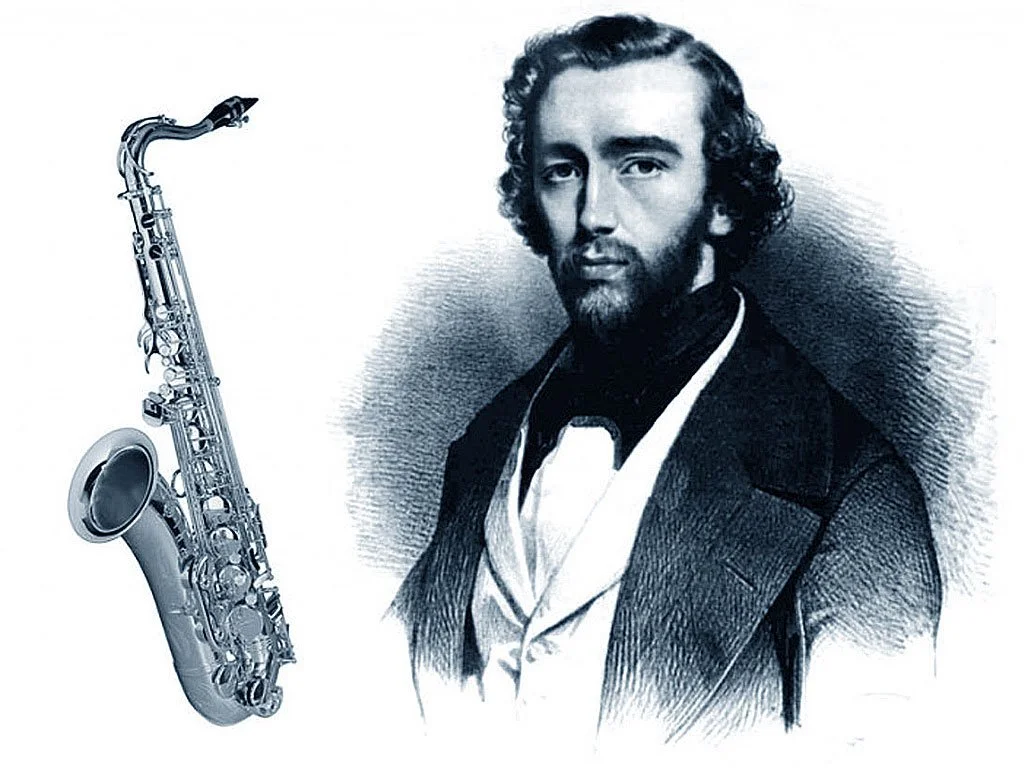
Named after its creator, Antoine-Joseph (Adolphe) Sax, a luthier born in Belgium, the saxophone was patented in March 1846. Adolphe’s father was a luthier who taught his son the trade. Adolphe spent many years working on his new instrument before patenting it.
Adolphe studied flute and clarinet at Brussel's Conservatory of Music when he was young. He felt that there was a missing range that a hybrid woodwind and brass instrument might be able to fill in an orchestra.
Sax's 1846 patent actually described 14 different versions of the saxophone ranging from F contrabass all the way up to E flat sopranino. In between were E flat contrabass, C bass, B flat bass, E flat baritone, C tenor, B flat tenor, F alto, E flat alto, C soprano and B flat soprano.
Sax showed off his new creation at the 1844 Paris Industrial Exhibition. That same year the saxophone was featured prominently in the debut of Hector Berlioz's Chant Sacre choral work.
When, in 1866, Sax's original patent expired, other instrument makers began working with the design and coming up with their own versions of the instrument. Even Adolphe renewed his original patent in 1881 with several changes.
Adolphe Sax died in 1894, but his son continued his saxophone business, watching his father’s creation flourish in the jazz age of the 1920s.